
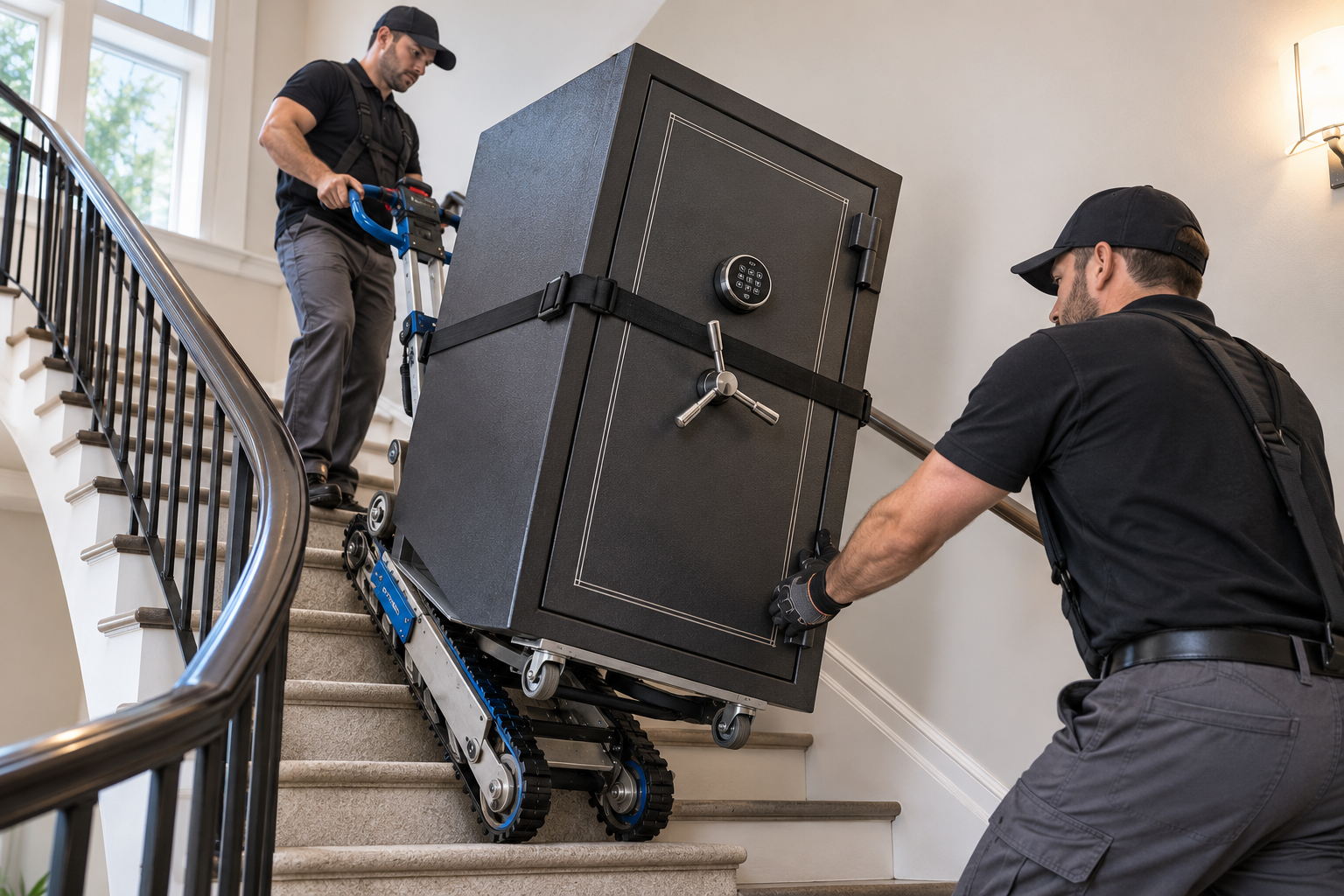
Moving a safe on stairs is a different problem from moving an ordinary load. The weight matters, but so do the safe’s dimensions, center of gravity, how the load is secured, and whether the complete machine-and-load setup can negotiate the staircase and landings.
Start with the actual safe weight
Use the actual loaded weight of the safe rather than relying on a machine’s headline rated capacity. A rated capacity is a hard ceiling, not proof that the same load is suitable for a particular staircase or handling configuration.
Check dimensions and center of gravity
A safe can be compact but extremely dense, and its center of gravity may sit differently from the loads a stair climber normally handles. Check height, depth and width together with how the weight is distributed through the frame and restraint system.
Securement matters as much as weight
The load must remain controlled throughout the ascent. Confirm that the safe can be properly restrained and that its shape does not interfere with operator positioning, machine movement or the stair path.
Measure the staircase and landings
Check stair width, usable clearance, turns, landing depth and any points where the safe or machine could contact walls, rails or other obstructions. A load that fits by weight may still fail the route-clearance test.
Use verified stair-limit evidence
Where a specific stair climber has verified contextual stair-load evidence, compare the safe’s actual load against that evidence for the relevant operator count and load position. When the required evidence is missing, do not infer eligibility from the machine’s rated capacity alone.
For a broader view of how different loads should be assessed, see our powered stair climbers for furniture guide. You can also review rated capacity versus stair limits, use the Stair-Fit Checker to precheck verified load and width constraints against the route, and then use the Powered Stair Climber Selector when the required verified evidence is available.
Our evaluation methodology explains how manufacturer and manual evidence is handled and why missing evidence stays missing.